EMA Smart Home System
An IoT-driven project aimed at making green living effortless by combining real-time utility tracking with smart automation,
Tools Used:
Beagle Bone Black Wireless, Click boards, Socket IO, Cloud 9 IDE







Project Scope:
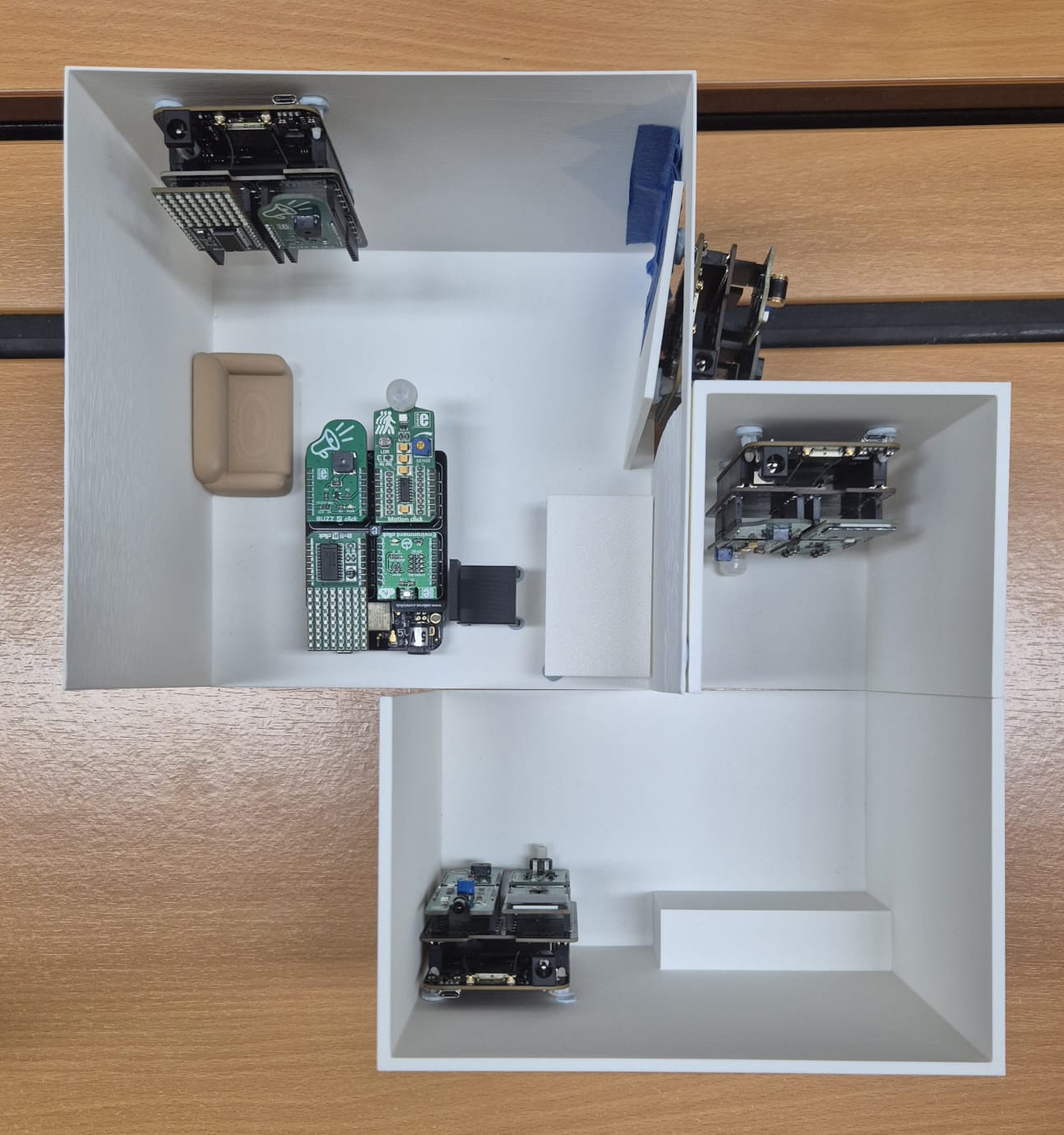
Tasked with designing a connected system project, my team set out to develop a project aimed at making green living effortless for averaged-sized families living in HDB households with a monthly utility bill of $100 and above. Featuring 4 BeagleBone Black Wireless boards (microcontrollers) and a selection of MikroBUS click modules, we combined real-time utility tracking with smart automation that comes along with a system that seamlessly bends sophisticated aesthetics with powerful functionality. EMA is a perfect solution to help households reduce energy consumption and costs, contributing directly to Singapore’s 2050 sustainability goals.
Ideation:
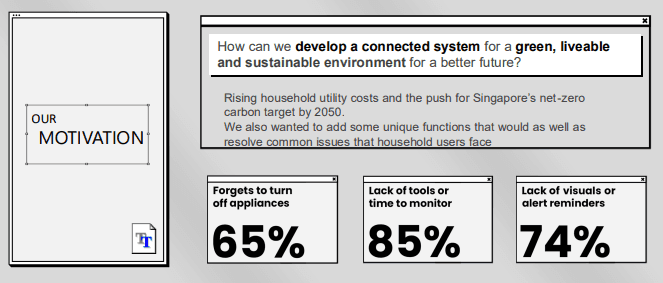
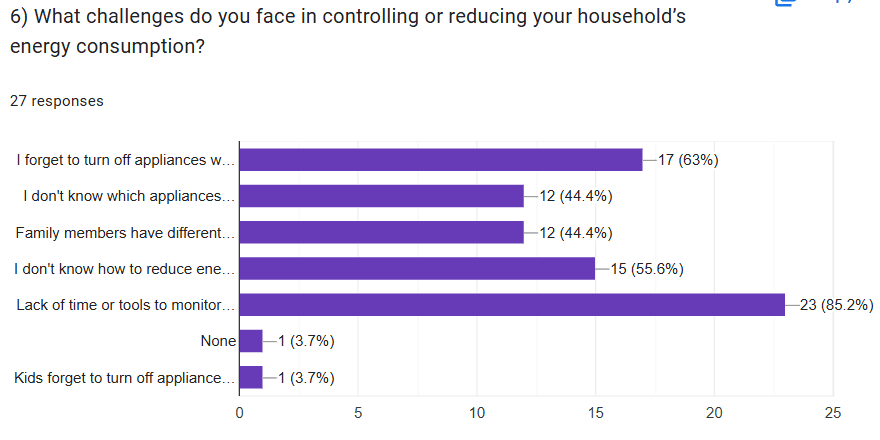
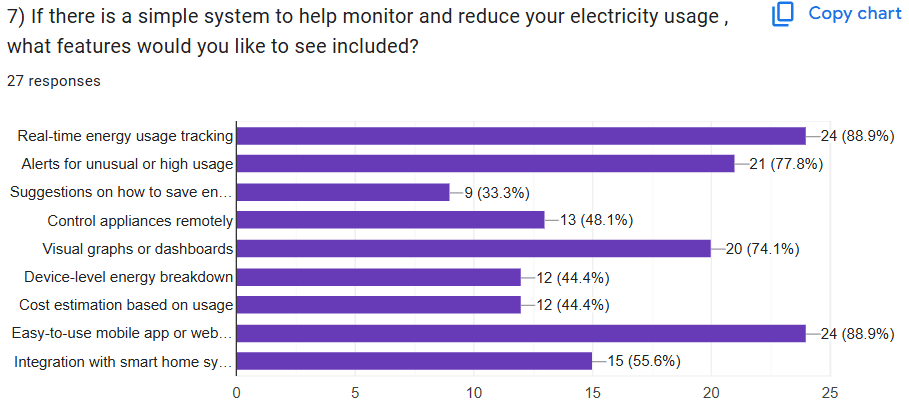
Our thinking process began by dissecting the common challenges homeowners face, such as high utility costs and the lack of real-time monitoring for appliances. We approached the solution by categorizing potential IoT features into three strategic pillars: energy efficiency, home security, and user convenience. By mapping these categories against documented pain points, we were then able to evaluate which ideas, like motion-sensing automation or real-time dashboards which offered the highest impact for the user. This structured brainstorming, illustrated in the matrix below, allowed us to consolidate multiple standalone ideas into the integrated EMA Smart Home System, ensuring that every technical feature was a direct answer to a real-world problem.
Solution
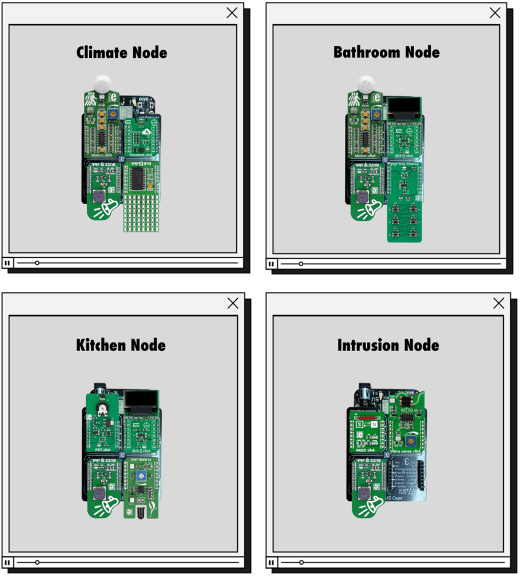
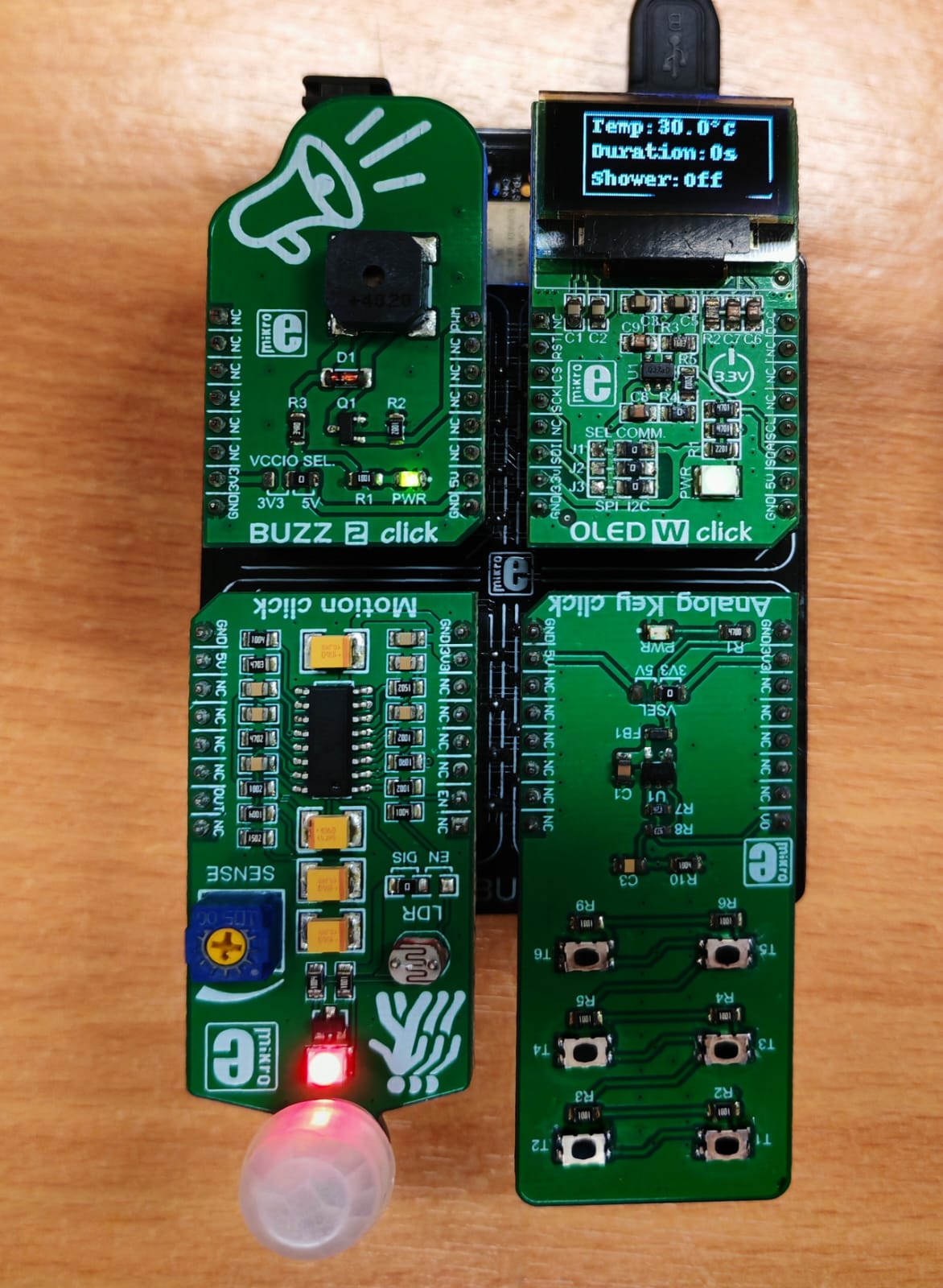
With the common challenges home owners face, we came up with the EMA Smart Home System. By combining smart sensors, automated plugs, and a centralized mobile dashboard, the system transforms traditional living spaces into "green tech" environments through these 4 different nodes: 1) Climate Node: Monitors temperature, Humidty and the presence of somebody in the room. It toggles the fan on only when a person is detected and the environment is warm and humid 2) Bathroom Node: Allows for a timer to be set depending on the owners descision for duration of shower using buttons and display. It automatically starts when it detects you entering the shower and a buzzer is sounded when time is up 3) Kitchen Node: Monitors energy usage from the fridge and sends an energy score to the website to display on the dashboard. It also functions as a fire alarm and sounds across all nodes if there is an outbreak of fire detectedz 4) Intrusion Node: Detects for door knocks and the opening of the door at unusual times, sounding an alarm across all nodes With these 4 nodes, our solution addresses the common common challenge of high utility bills by providing users with precise data tracking and automated power-saving features, such as motion-activated lighting and remote appliance management.
Process
A step by step walk through on how the team manage and execute the project to make it come to life
The Challenge:
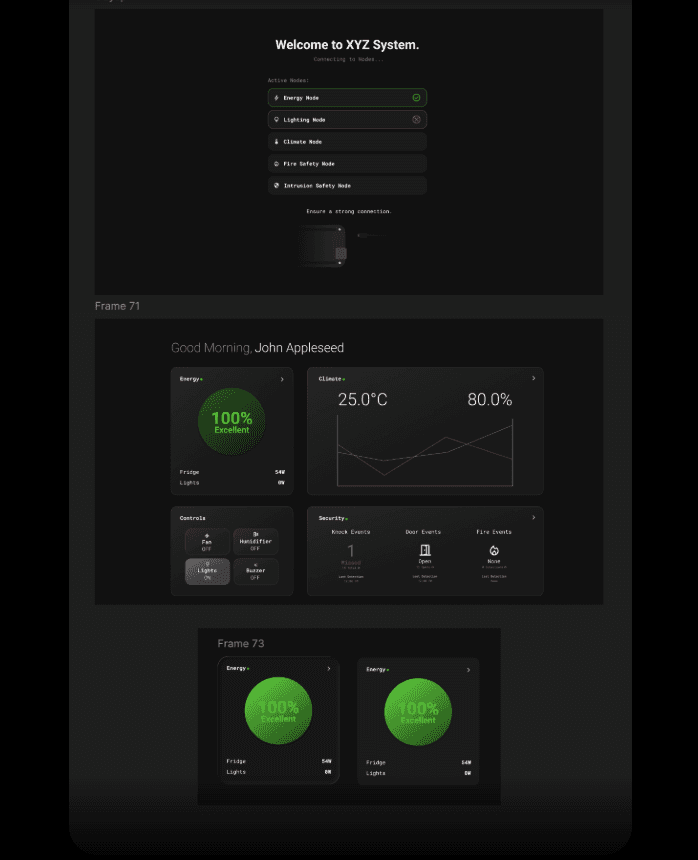
We faced a significant hurdle in making complex energy data readable. While the sensors provided highly technical metrics, our target users included everyday homeowners who might find raw data overwhelming. To solve this, we pivoted our design strategy toward a Mobile First simplicity. We focused on clear typography and a clean layout, ensuring that the most critical information like real-time energy costs was front and center, reducing the cognitive load for less technologically advanced users
The Result
The implementation of the EMA system successfully achieved its goal of creating an energy-conscious living environment, resulting in a measurable reduction in household utility usage through automated appliance management and real-time energy monitoring. By providing users with direct insights into their consumption patterns via the web dashboard, the project demonstrated that gamified challenges and automated triggers are effective tools for encouraging sustainable habits. Through this process, the I learned the importance of modular hardware design in reducing electronic waste and the necessity of seamless software hardware synchronization to ensure system reliability. I think in conclusion, the project showed that a successful IoT solution requires not only technical functionality but also a user-centric approach that simplifies complex energy data into actionable feedback.