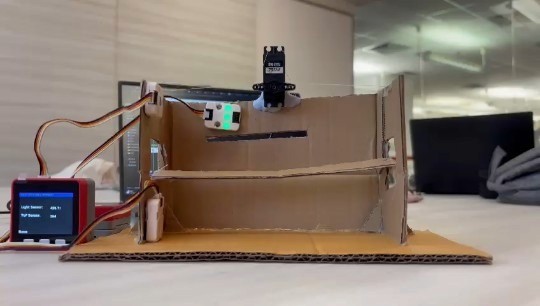
Smart Factory
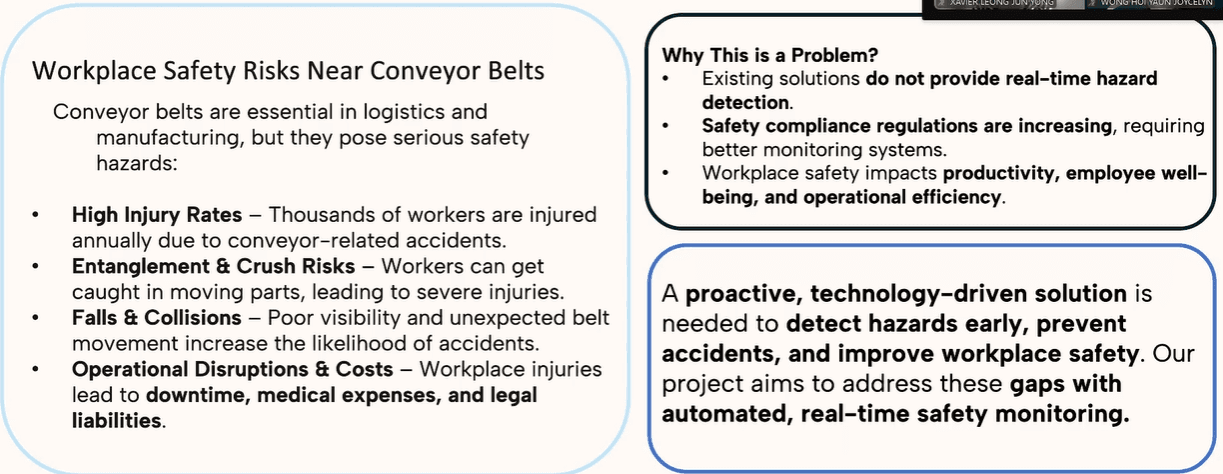
Reducing workplace hazards, operational downtime, and costs associated with injuries and repairs, creating a safer environment.
Tools Used:
M5Stack, TOF Sensor, RGB Unit, Servo Motor, Light Unit







Project Scope:
This project focuses on improving worker safety near conveyor belts commonly used in logistics and warehouses. Using M5Stack components, the system monitors worker proximity, detects motion, and activates barriers to prevent accidents. Visual and auditory alerts signal danger zones, while optional environmental monitoring addresses conditions like humidity and dust.
Ideation:
Our ideation process began with the Driving Question: how to maximize factory efficiency while prioritizing worker safety and well-being. Recognizing Singapore’s push toward smart technology, we identified a critical tension between the drive for high industrial output and the human risks of automation, such as worker stress and potential safety hazards. To address this, we brainstormed a balanced solution that integrates automated security and environmental monitoring. We decided to focus on two core functionalities: a secure access system using RFID to ensure only authorized personnel enter specific zones, and a PIR-based motion sensing system to monitor activity and automate safety protocols. By combining these M5Stack-based components, we aimed to create a prototype that modernizes factory operations without compromising the health or security of the workforce.
Solution
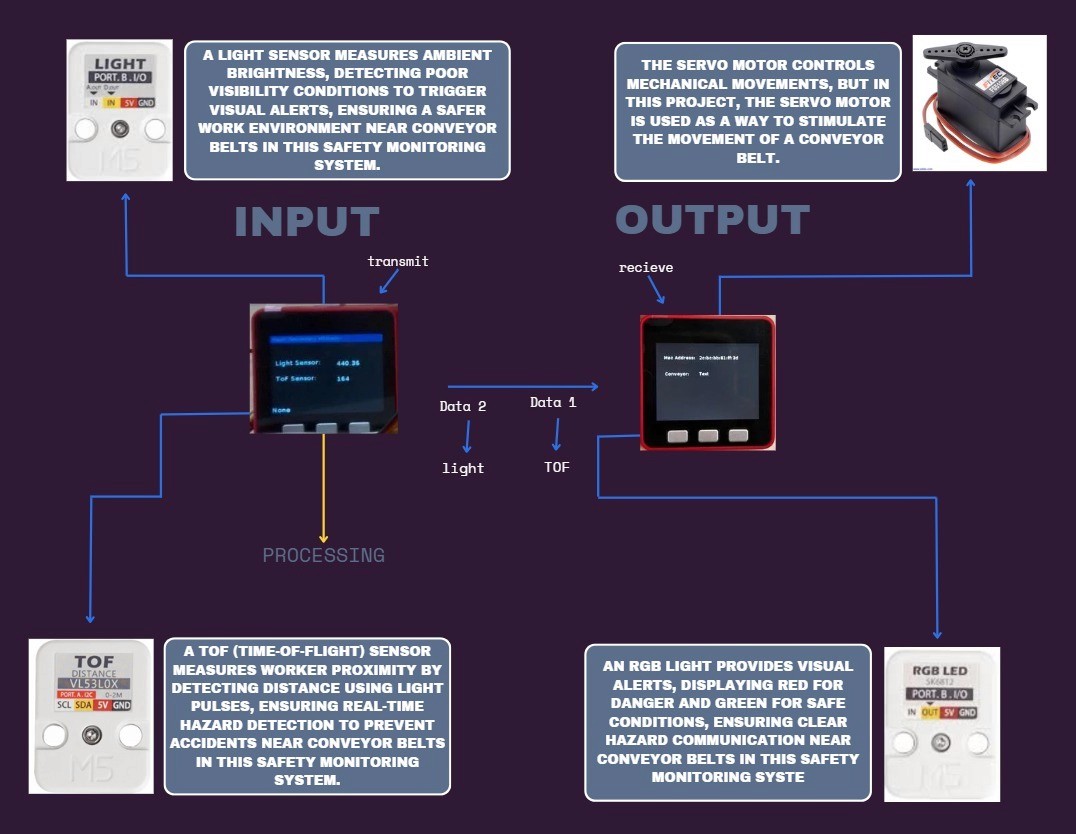
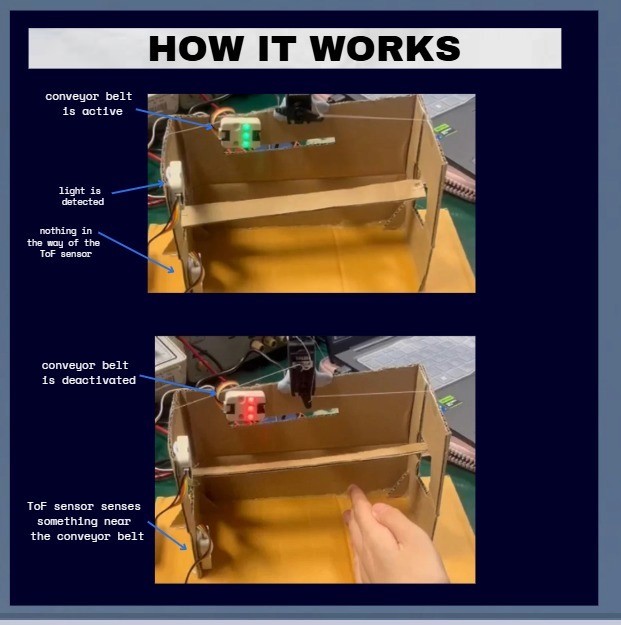
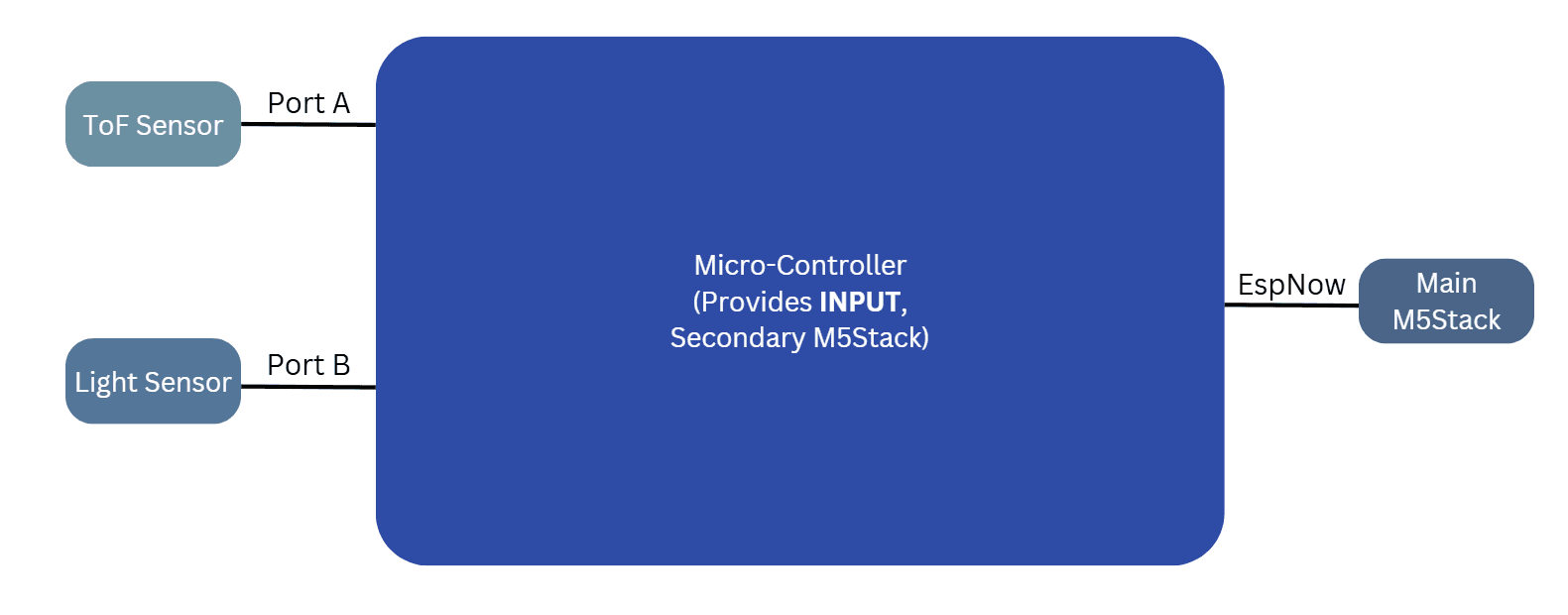
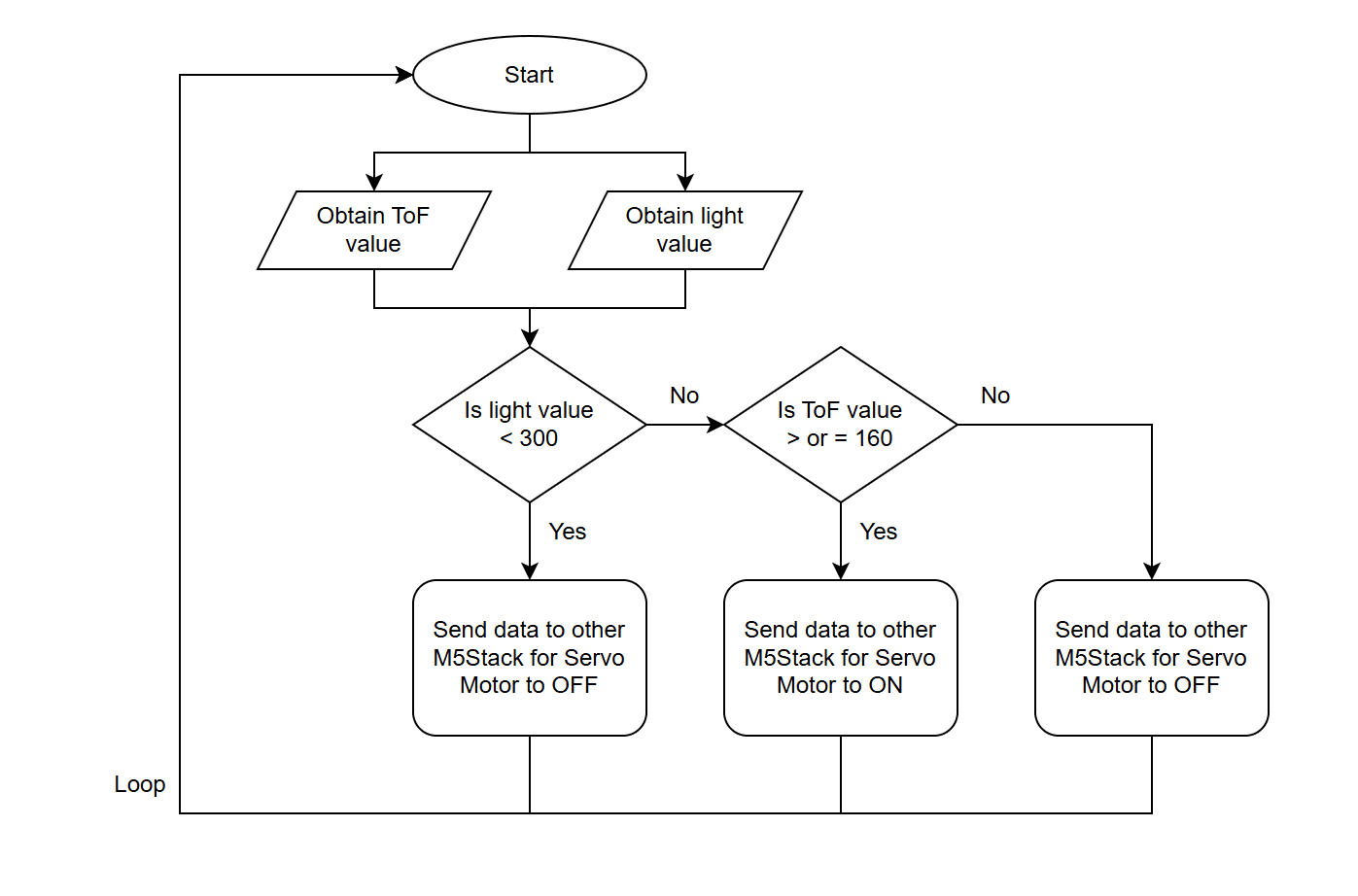
The solution centers on a synchronized IoT ecosystem built using M5Stack Core hardware and modular sensors to automate factory floor access and safety protocols. By combinging the smart sensors, both input and output and a digtal display which is the M5stack, the system transform dangerous workplaces into a much safer environment through these 4 sensors: Presence Sensor: Utilizes a Time of Flight (TOF) Sensor to establish a high-precision safety perimeter, accurately detecting if personnel enter a hazardous proximity to the conveyor belt. Servo Motor: Acts as an active safety mechanism by mechanically deploying barriers or stopping equipment the moment a proximity breach is detected to prevent workplace injuries. Environment Checker: Integrates a Light Sensor to continuously monitor ambient conditions, ensuring the workspace meets the necessary illumination standards for safe manual operation. Warning System: Features an RGB LED indicator for real-time status updates; the system maintains a "Green" state for safe operations and triggers a "Red" alert to provide an immediate visual warning when workers are too close to moving parts.
Process
The Challenge:
A primary challenge during development was the calibration and stability of the Time-of-Flight (TOF) sensor within a simulated factory environment. Because industrial surfaces (like a moving conveyor belt) can have varying textures and reflective properties, the sensor initially produced signal noise, leading to false positive triggers of the RGB warning system and the servo motor. To resolve this, we implemented a software based smoothing algorithm that averaged distance readings over a specific interval, ensuring the safety measures only deployed upon a genuine proximity breach rather than a momentary data spike. This refined the system’s reliability and prevented unnecessary production downtime caused by flickering sensors
The Results
The project successfully resulted in a functional prototype featuring an RFID Employee Card Scanner and an improved PIR sensor system. Through testing, we confirmed that the RFID module effectively managed access control, while the PIR sensor provided reliable motion detection to enhance environmental awareness within a simulated factory setting. A key lesson we learned was the importance of system integration and how different IoT modules must be seamlessly coordinated to provide a holistic safety solution rather than just isolated features. We also gained valuable insights into the dangerous side of engineering, by realizing that for technology to be truly "smart", it must be designed with the target user's in mind, ensuring that automation supports workers rather than just replacing or stressing them.