Grocery store interface
Python based Grocery Odering System provides an intuitive digital storefront that balances a user friendly shopping experience across diverse categories
Tools Used:


The Goal:
The primary goal of this project was to develop a user friendly Grocery Ordering System that simplifies the digital shopping experience. By prioritizing a consistent and clean interface, the system aims to provide a seamless journey for users from browsing through diverse product categories like Drinks, Frozen Food, and Household items to completing a transaction. A key objective was to ensure a "comfortable user experience" by reducing technical friction through error prevention logic code and flexible fulfillment options, such as personalized delivery scheduling and multiple pickup locations. The project sought to bridge the gap between complex inventory management and an accessible, easy to navigate consumer application.
Ideation:
The ideation for the Grocery Ordering System was driven by the need to improve the inventory management into a simplified, comfortable shopping experience for everyday users. My thinking focused on creating a digital storefront that prioritizes a consistent design to minimize user confusion and technical friction. This involved conceptualizing a logical flow that serves two distinct user groups: customers who need intuitive navigation and staff members who require a secure, password protected administrative back-end to manage inventory in real time. By integrating essential logistical features like dynamic delivery fee calculations based on order value, the ideation phase successfully transformed a basic purchasing script into a comprehensive, user-centric service model.
Solution
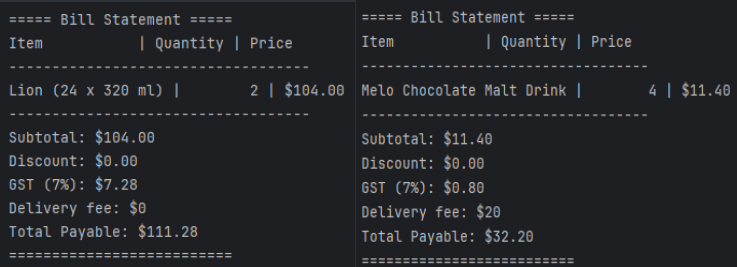
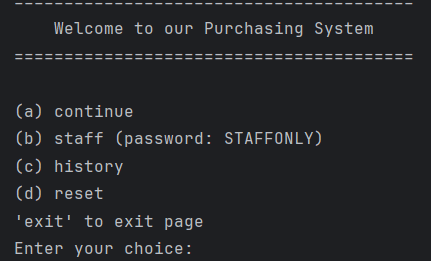
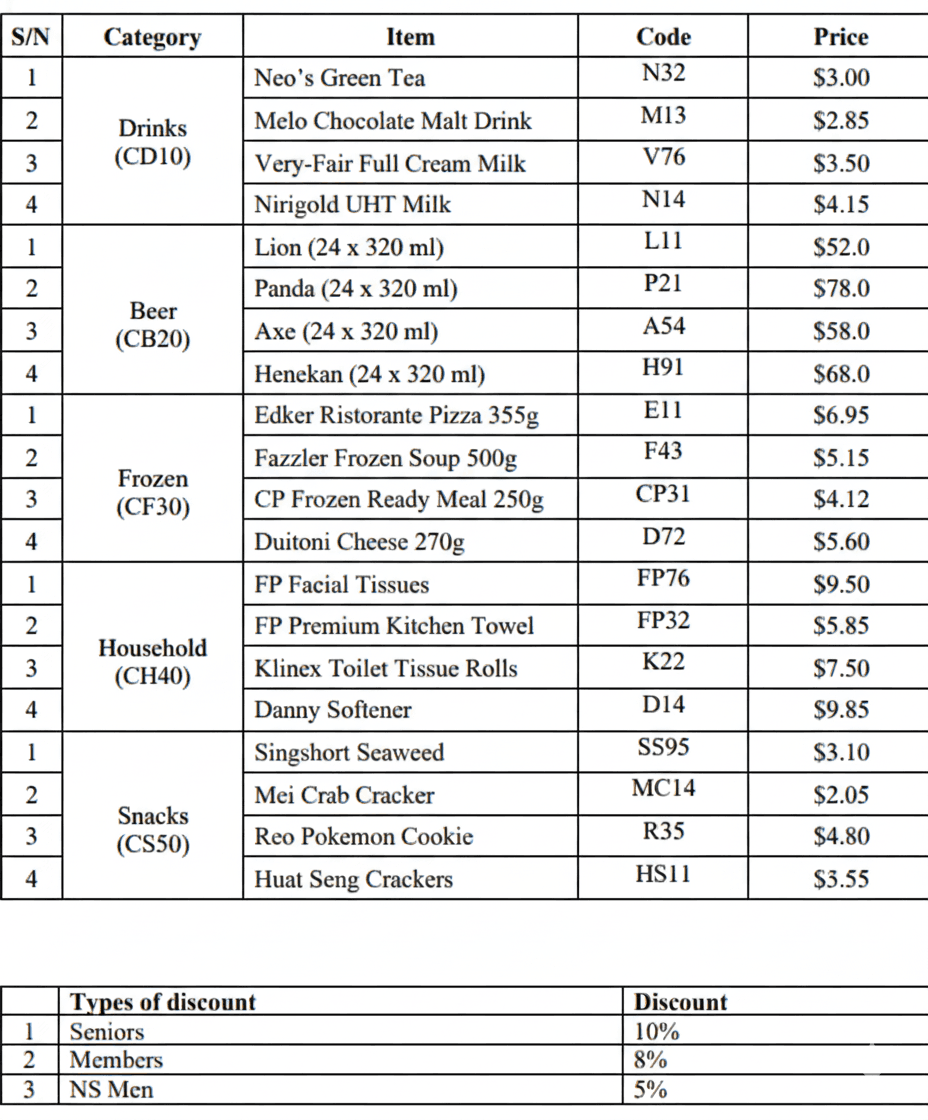
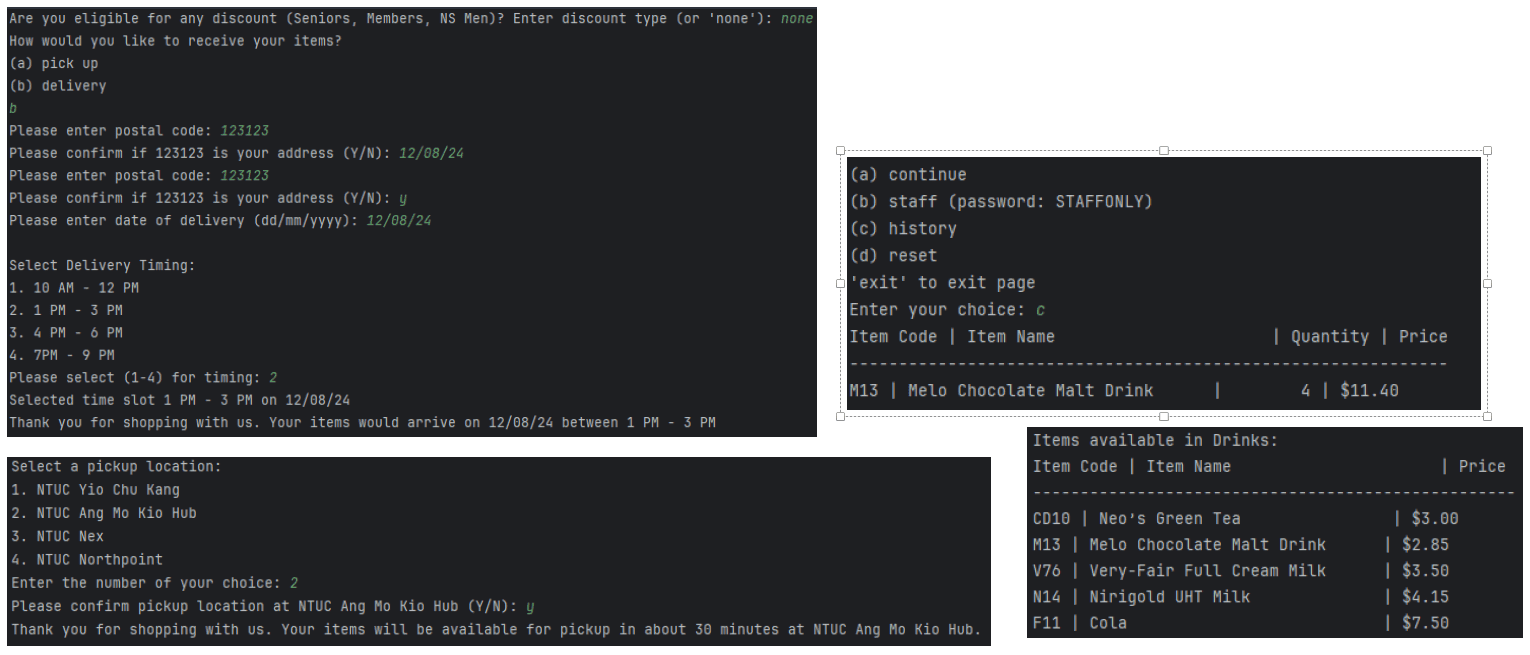
The solution is a comprehensive Python based Grocery Ordering System that automates the shopping experience through an intuitive, user-friendly interface. By integrating a Cart function, the system provides a seamless workflow for users to browse diverse product categories and manage their purchases. It also successfully balances customer convenience with administrative control by offering flexible fulfillment options alongside a secure staff portal for real time inventory management. The systems solves many problems through these key features: Category Based Shopping: Browse five distinct sections including Drinks, Beer, Frozen, Household, and Snacks. Dynamic Cart System: Add items by code and quantity, view formatted selections, or remove items with built-in validation. Staff Management Portal: A password protected area for staff to add, remove, or edit item prices and inventory details Integrated Fulfillment: Offers delivery with postal code prompts and scheduled timings, or self-pickup at four designated locations. Automated Receipt Billing: Calculates subtotals, GST (7%), and member discounts, outputting a professional bill statement. History & Reset Functions: Allows users to view past transaction history or clear all stored purchase data.
Process
The Challenge:
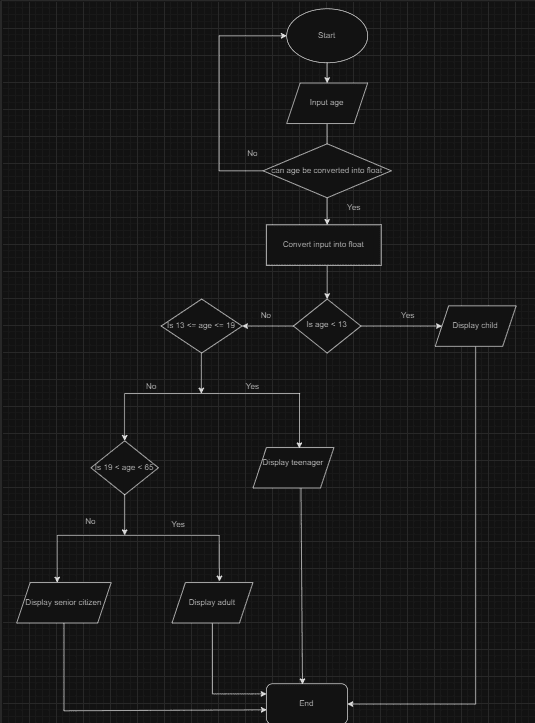
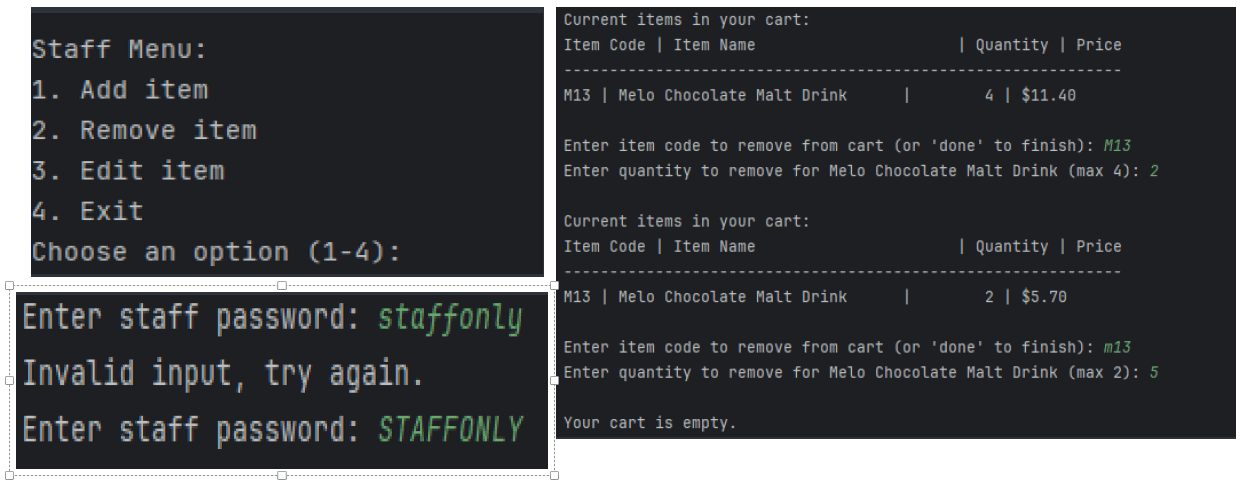
The primary challenge of this project was designing a system that remained error proof while managing a complex set of user inputs. Developing the logic to handle various edge cases such as preventing users from entering negative quantities or ensuring the system correctly cleared all items if a removal amount exceeded the cart's contents required a rigorous approach to input validation. In the end, after many versions of the code, only did I manage to code a function that handled most of the cases. Additionally, balancing the dual interface requirement for both customers and staff was a significant hurdle all while ensuring a consistent and comfortable user experience throughout these complex operations. It required meticulous attention to interface design to prevent user confusion during the checkout and fulfillment phases.
The Result
The final result is a functional, error resistant Grocery Ordering System that successfully fulfills both customer convenience and inventory management requirements. By differentiating the "Staff" and "Cart" code, the system achieved a high level of reliability, ensuring that user errors such as entering negative quantities are automatically handled. Through this project, I gained deep technical proficiency in Python logic and data management, particularly in using loops and conditionals to process complex transactions like GST calculations and member discounts. Most importantly, I learned the value of user centric design. I discovered that consistent formatting (such as receipt-style displays) significantly reduces user confusion and creates a much more comfortable and professional digital experience.