Mecha Sort
Arduino-based system designed to categorize packages into three sizes (S, M, L) to increase logistics efficiency and reduce manual labor during busy periods
Tools Used:
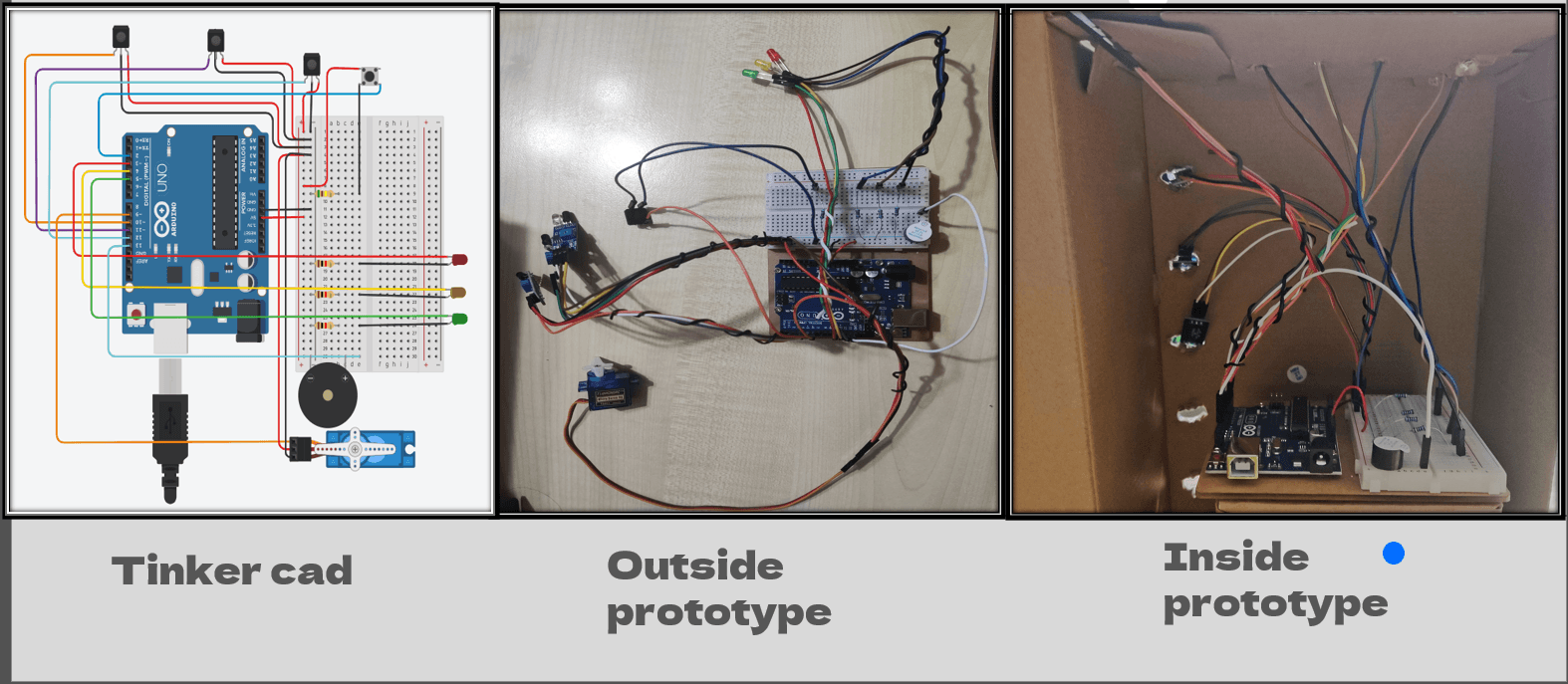
IR Sensor, LED (Red/Yellow/Green ), Servo Motor, Button, Buzzer






The Goal:
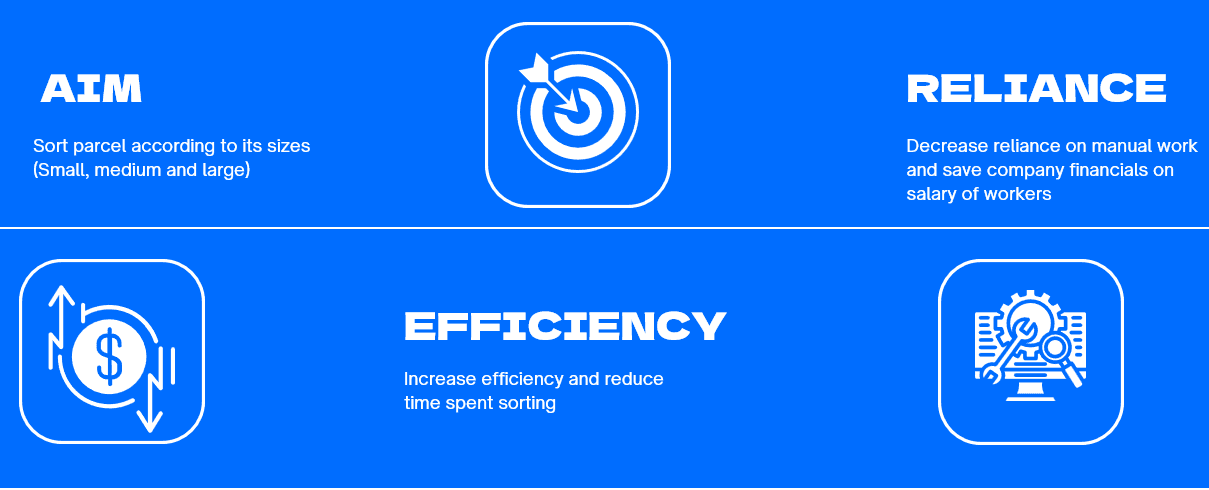
The primary goal of this project is to engineer an automated solution for sorting parcels into three distinct sizes small, medium and large to address the logistical challenges posed by the rise of online shopping. By replacing manual sorting with a sensor driven machine, the project aims to significantly increase operational efficiency and reduce the time required to process deliveries during peak sales periods. Furthermore, the system is designed to decrease a company's reliance on manual labor, ultimately optimizing financial resources by saving on worker salaries
Ideation:
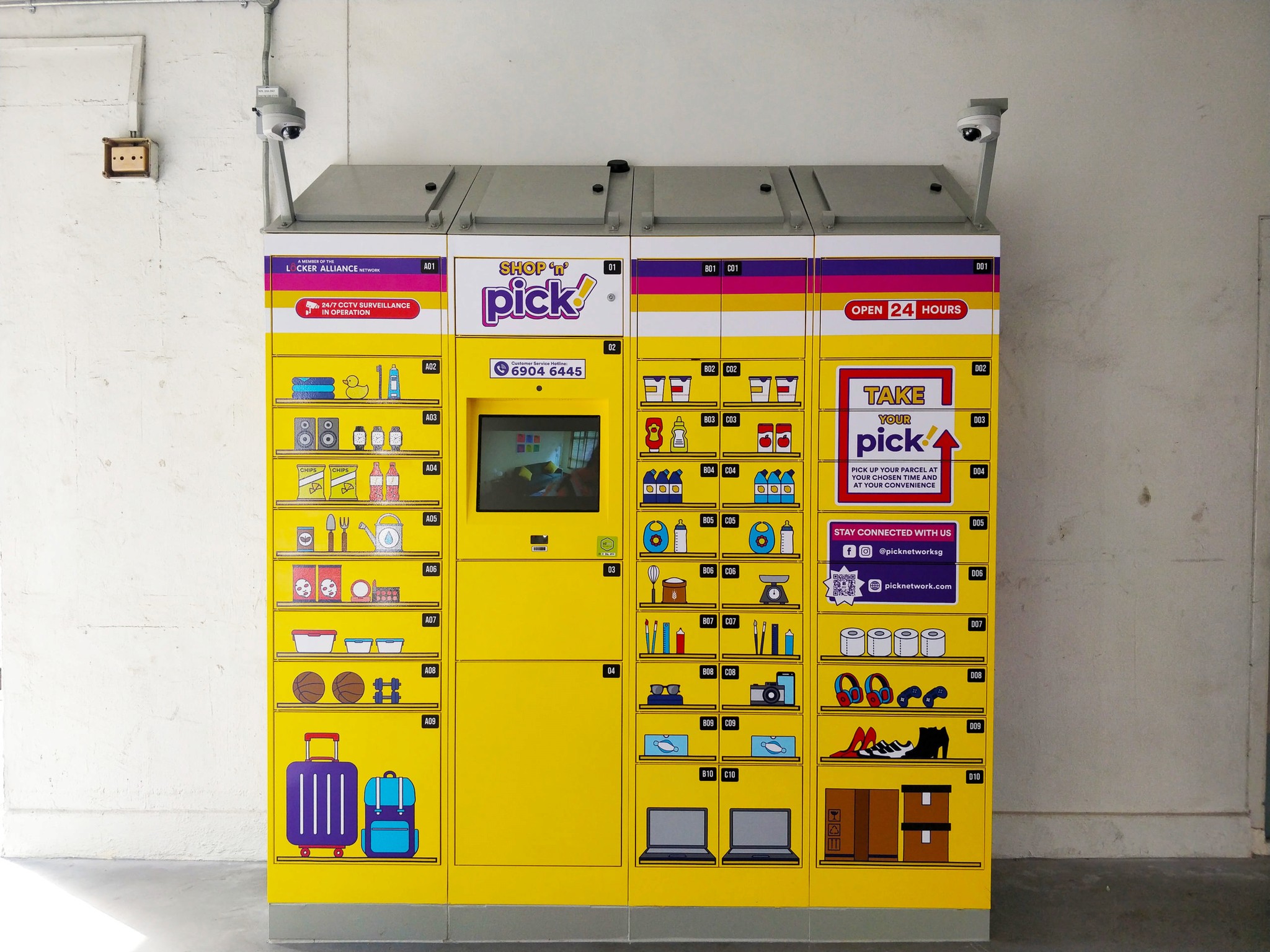
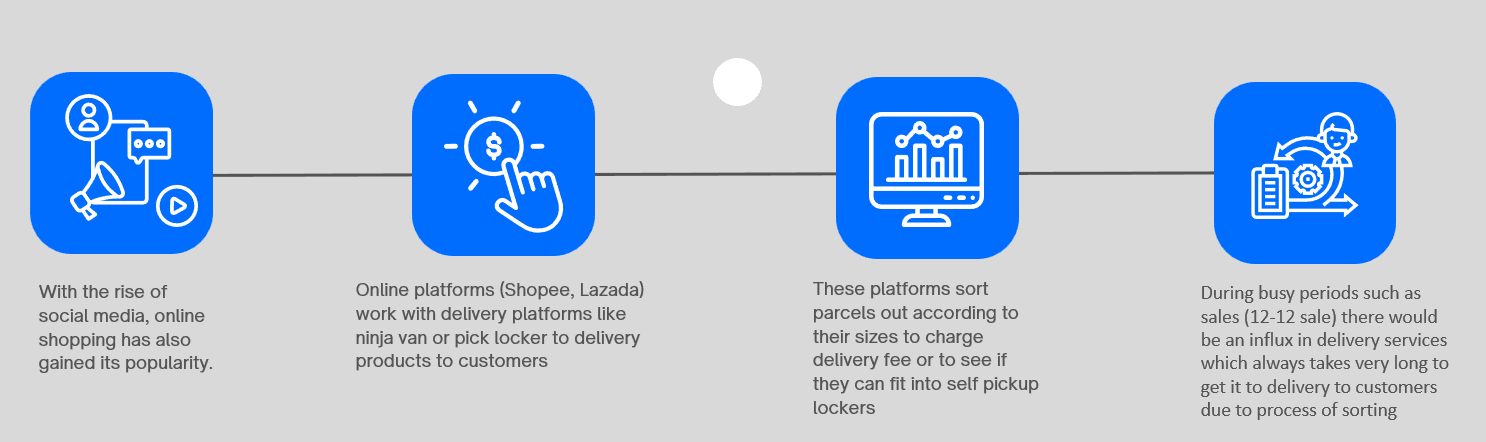
My ideation process began with the observation that the rise in online shopping and peak sales periods, like 12-12, create massive logistical problems that delay customer deliveries. I realized that the most effective way to streamline this was to automate the categorization of parcels into small, medium, and large sizes to facilitate faster delivery fee calculations and locker assignments. My thinking centered on a vertical sensor array logic, where the physical height of a package would trigger specific IR sensors to determine its size tier. This led to a design that prioritizes reducing manual labor and operational costs by replacing human measurements with a responsive, hardware driven feedback loop.
Solution
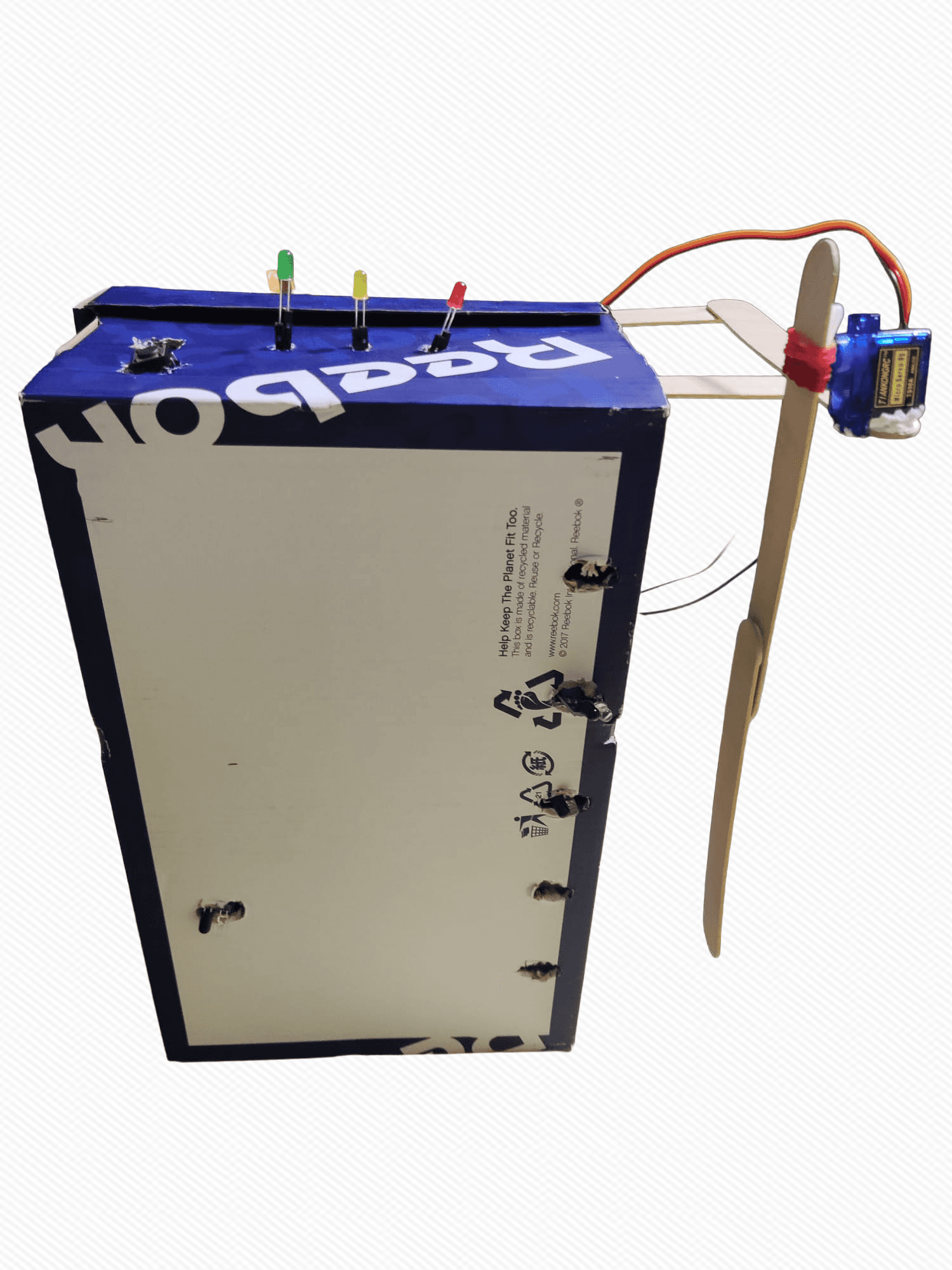
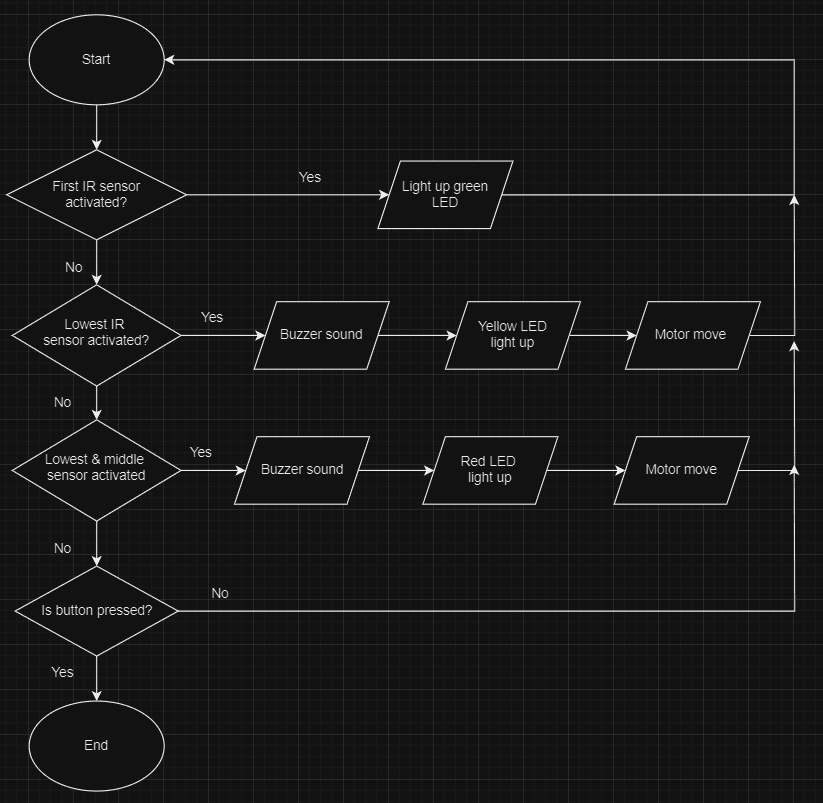
The solution is a hardware driven automated system centered around an Arduino Uno that uses a vertical array of IR sensors to detect parcel dimensions. Based on the logic programmed into the controller, the system classifies packages by height: a single sensor trigger identifies a small parcel, while the activation of both the lowest and middle sensors classifies it as medium or large. Once the size is determined, the machine provides immediate feedback through a buzzer and a color coded LED system (Green, Yellow, or Red) while a Servo motor actuates to physically sort the parcel into the corresponding category. This integrated design replaces manual measurement with a responsive, real time mechanism to ensure high speed processing and accuracy through these components: IR Sensor: Detects the presence and height of a parcel to determine if it is small, medium, or large. LED (Red, Yellow, Green): Provides visual feedback based on the parcel size; Green indicates a small parcel, Yellow for medium, and Red for large. Buzzer: Emits an audible alert whenever a medium or large parcel is detected and categorized. Servo Motor: Acts as the mechanical sorting arm, moving to physically direct the parcel after a sensor is activated. Button: Serves as the system's manual control to end the program or reset the sorting process.
Process
The Challenge:
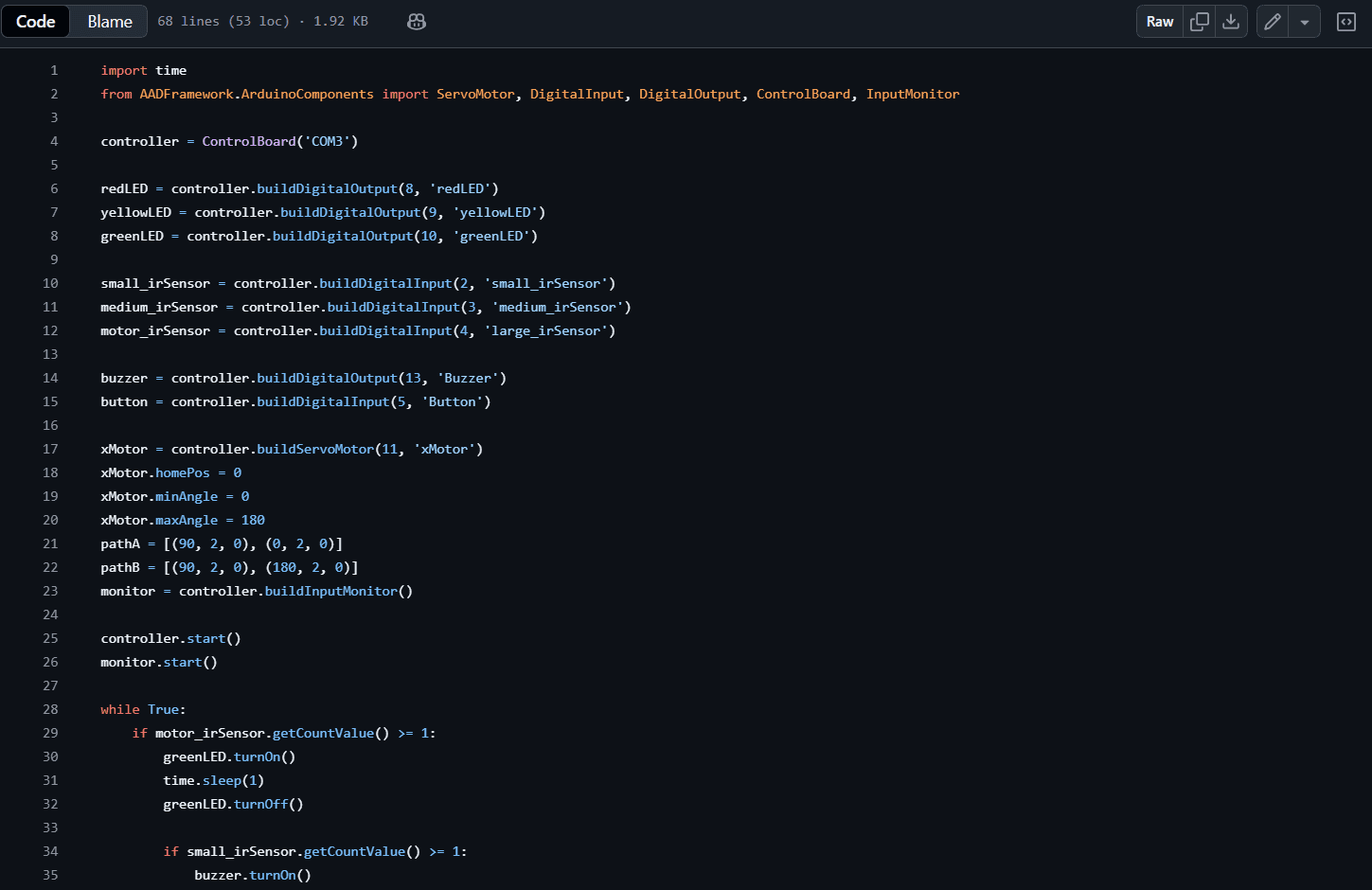
During the development of the parcel sorting machine, the primary challenge involved the technical complexity of coding multiple distinct functions to ensure the system met all project requirements. I had to also design a physical prototype, using a repurposed box, that could precisely house the circuit and align the vertical sensors while maintaining a neat and organized wiring layout. Balancing these hardware constraints with the software logic proved to be difficult, especially when refining the sensor thresholds to accurately distinguish between the three parcel sizes. In the end, these problems required alot of troubleshooting and testing along with careful cable management to transform the initial idea into a finalized, functional product.
The Result
The final result was an integrated Smart Factory simulation that effectively demonstrated how IoT and automated monitoring can enhance industrial safety and productivity. The system successfully synchronized proximity sensors, automated cooling fans, and emergency alert systems to create a responsive manufacturing environment. This project taught me the fundamental principles of Systems Thinking, where I learned how individual components like motors and sensors must be coded to communicate with one another to prevent system failures. Additionally, I gained proficiency in circuit optimization and cable management, realizing that a neat and organized hardware layout is essential for both the reliability of the system and the ease of future maintenance or scaling.