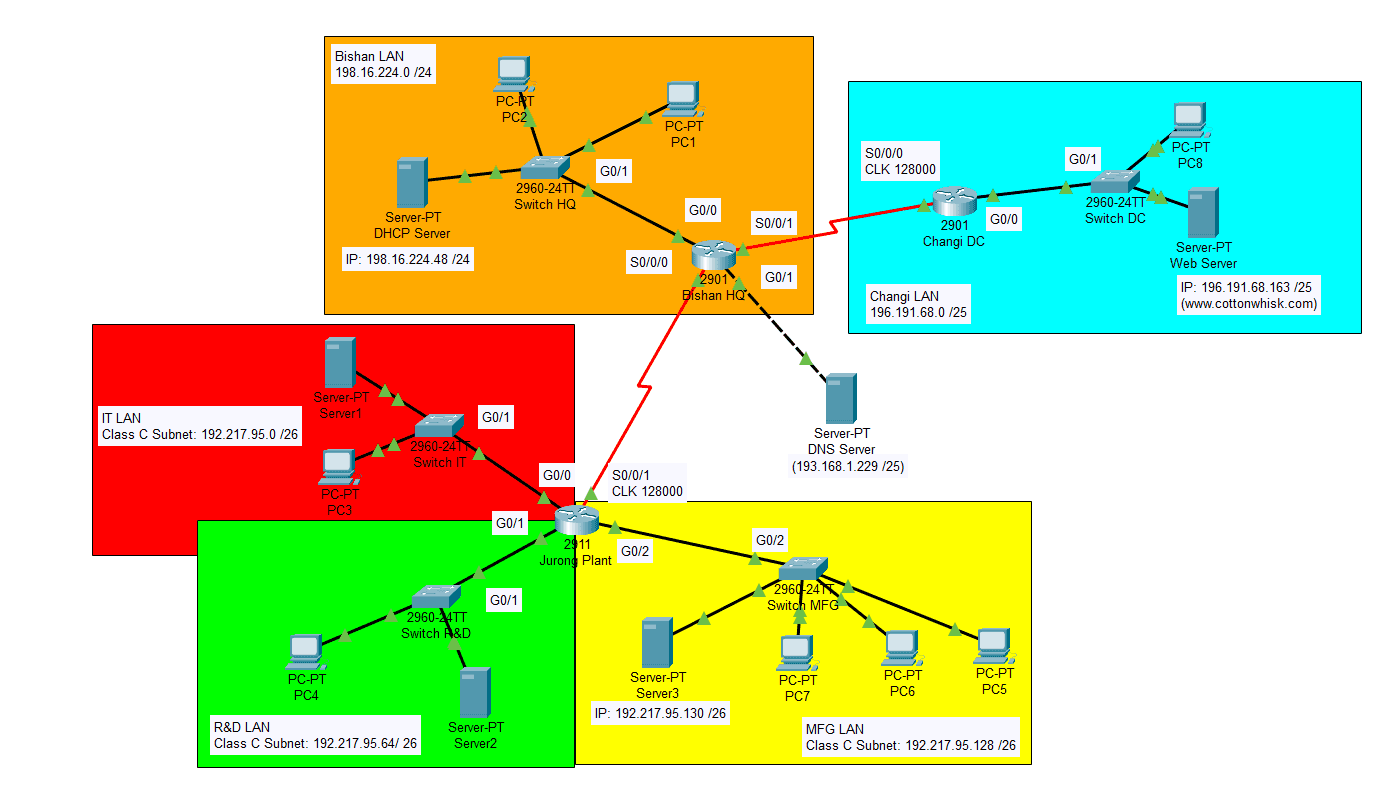
World Toy Pte Ltd Enterprise Network Infrastructure
This project involves designing and configuring a secure, multi-branch enterprise network using Cisco Packet Tracer
Tools Used:

The Goal:
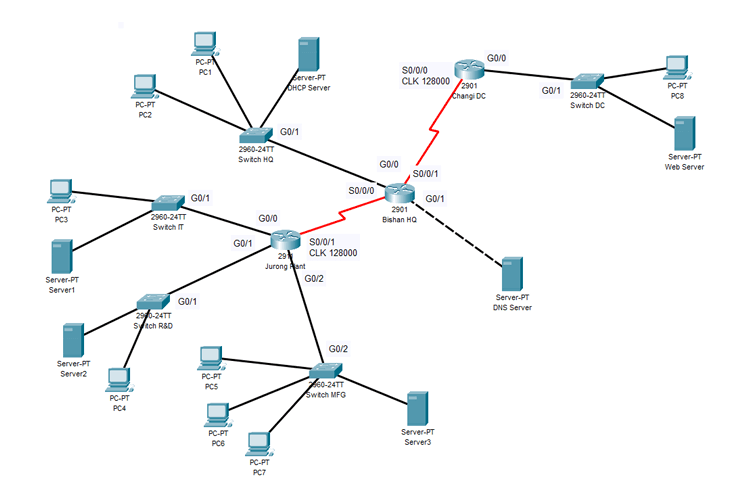
The objective was to design and implement a scalable imaginary enterprise network for World Toy Pte Ltd to connect their Bishan Headquarters with two branch offices. The goal was to ensure seamless cross branch communication, automate IP address management for high density departments, and establish secure access to centralized web resources and internal servers. This was all done with the integration of static routing, DHCP automation and DNS services to ensure seamless connectivity between headquarters and branch offices.
Ideation:
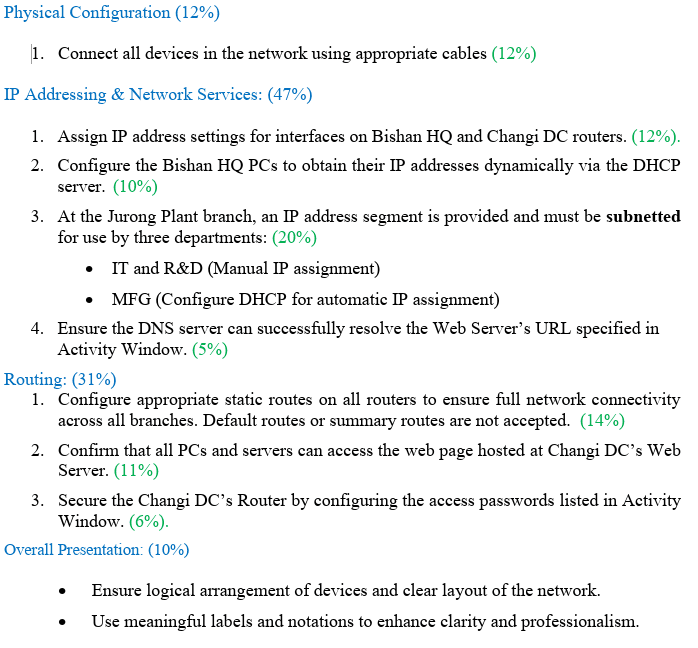
The planning phase focused on creating a hierarchical network topology that balanced efficiency with security. I conceptualized a layout where the Changi Data Center acts as the core hub for services, while the Bishan HQ and branch offices utilize specific subnets to organize different departments like IT, R&D and Manufacturing. I decided to prioritize a mix of manual IP assignment for critical infrastructure and DHCP automation for general workstations to streamline network administration.
Solution
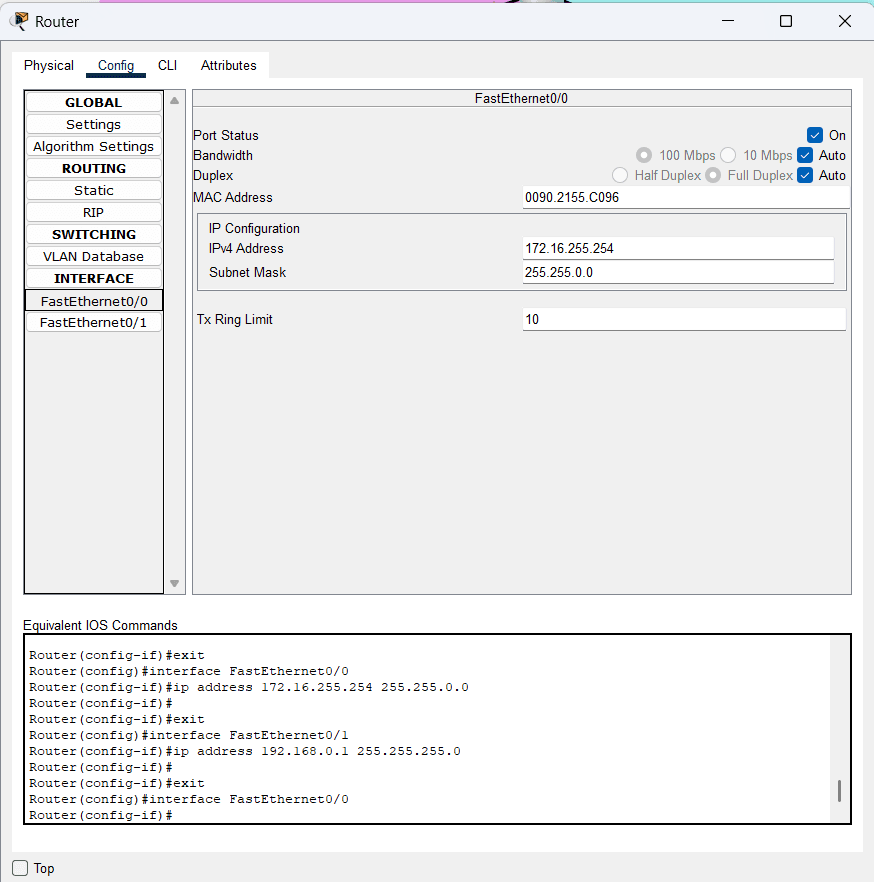
The solution is a multi-branch network architecture built in Cisco Packet Tracer that utilizes static routing for precise traffic control between locations. It features automated DHCP services for the Manufacturing department, a centralized DNS server for URL resolution, and a secured Changi DC router with password-protected access to safeguard the network’s core. These are the parameters assigned: Bishan HQ Router Se0/0/0: 172.31.11.81 / 24 Se0/0/1: 172.30.10.50 / 24 Changi DC Router Se0/0/0: 172.30.10.159 / 24 Jurong Plant Router Se0/0/1: 172.31.11.214 / 24 DNS Server IP Address: 193.168.1.229 / 25 Gateway: 193.168.1.146
Process
The Challenge:
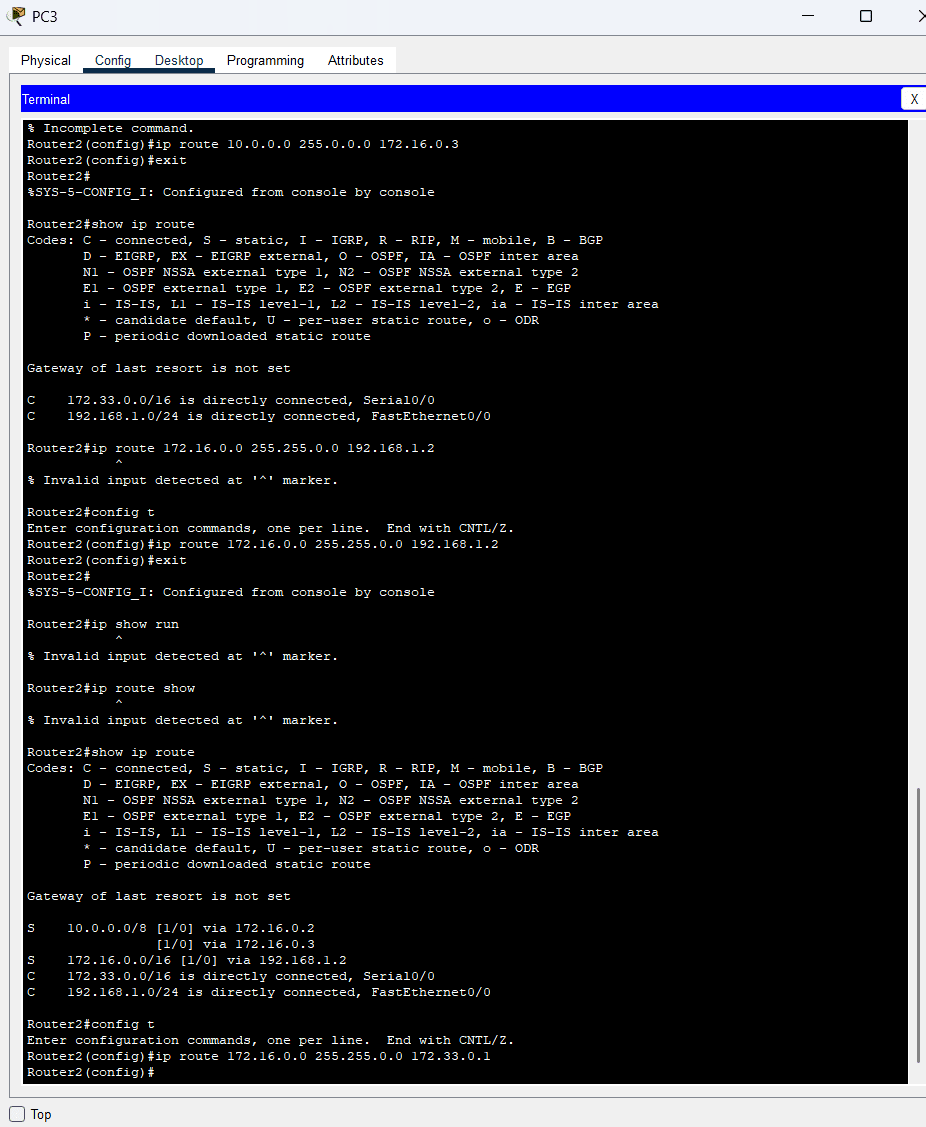
The most significant challenge was achieving full network reachability allowing each component to communicate with each other while strictly adhering to the requirement of using only static routes instead of default or summary routes. This required meticulous manual configuration of routing tables on every router to ensure that packets could find the correct path to every subnet in the enterprise. I had to do troubleshooting with the ping command failures between distant branches often required tracing the path hop-by-hop to identify missing return routes in the configuration.
The Result
The project resulted in a fully functional, professional network where all PCs and servers could successfully communicate and access the centralized web server. Through this project, I gained deep technical proficiency in Cisco IOS configuration and a strong understanding of how DNS and DHCP services integrate within a corporate environment. I learned the critical importance of meticulous documentation and labeling in network design, realizing that a clear, organized layout is essential for efficient troubleshooting and long term network maintenance.